How High Should a STOP Sign Be Mounted? A Simple Guide for Anyone Installing One Whether you’re installing a STOP sign for a business, HOA, private property, or a small community road, proper mounting height is critical for visibility and safety. Here’s the simple, non-engineer-friendly guide. Why STOP Sign Height Matters A STOP sign that’s too … Continue reading “How High Should a STOP Sign Be Mounted?”
Need a Custom Traffic Cone Clip-On Sign? We Make It Fast & Easy! While Traffic Safety Store offers 64 different stock clip-on sign messages, sometimes your unique situation calls for something more specific. Whether it’s a company logo, a specific instruction, or a one-of-a-kind warning, we can create custom traffic cone clip-on signs tailored precisely to your needs! Watch: How … Continue reading “Need a Custom Message Traffic Cone Clip On Sign? Find out how”
The Best Traffic Apps for 2025: Ultimate Guide to Navigation and Real-Time Alerts In 2025, navigation apps go beyond basic directions, leveraging AI for predictive routing, enhanced privacy features, and seamless EV integration. Drawing from updated independent reviews by PCMag, Consumer Reports, CNET, and U.S. DOT, this guide spotlights the top traffic and navigation apps trusted by millions—now including fresh … Continue reading “The Best Traffic Apps for 2025”
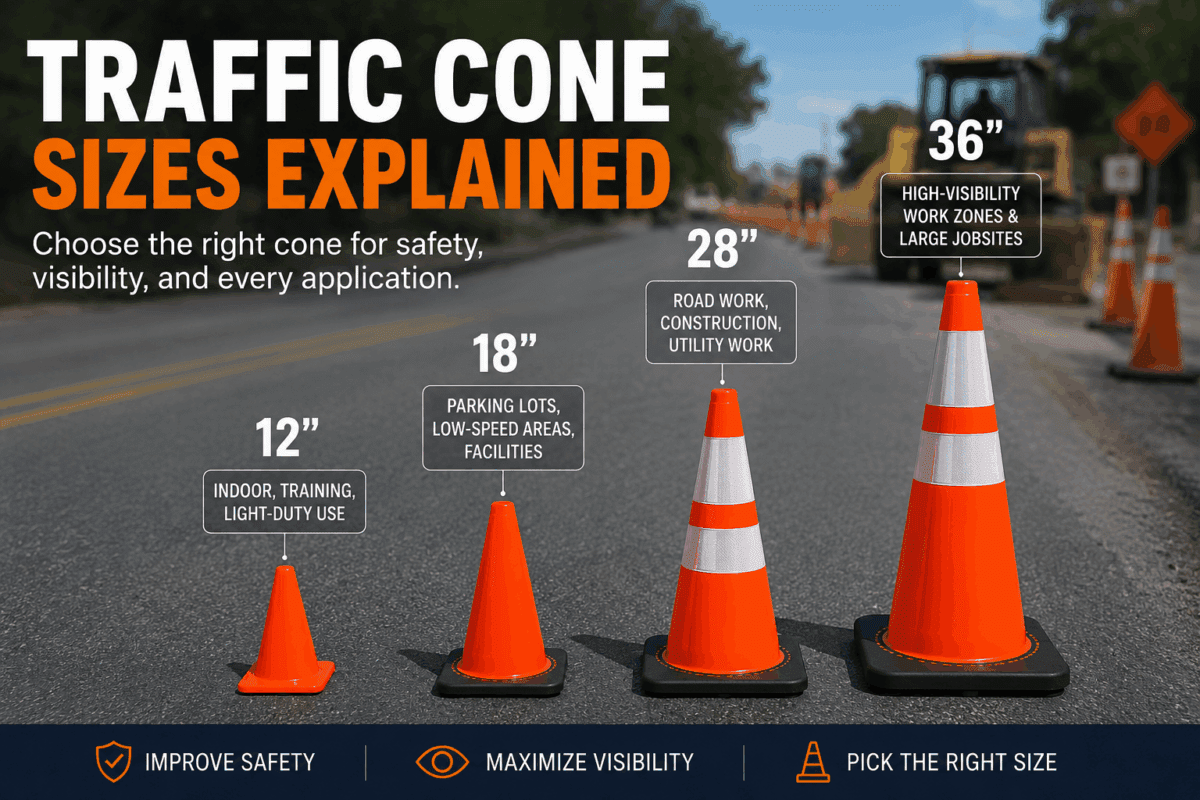
Traffic Cone Checklist: MUTCD Sizes, Reflective Collars & Compliance Guide Choosing the right traffic cone isn’t just a preference — it’s a critical safety and compliance requirement. This checklist translates the latest MUTCD traffic cone requirements into clear steps so your crews bring the correct cones for speed, time of day, and work-zone complexity. MUTCD-compliant cones with the required reflective … Continue reading “Traffic Cone Checklist – Do you have the right cone?”
Understanding the MUTCD: Why Every Contractor Should Know the Basics The Manual on Uniform Traffic Control Devices (MUTCD) sets the national standard for how traffic signs, signals, markings, cones, and barricades are designed and placed. Every contractor working on or near a roadway needs to know its basics—because safety, compliance, and liability all depend on it. What Is the … Continue reading “Understanding the MUTCD: Why Every Contractor Should Know the Basics”
DOT Conspicuity Tape Standard (FMVSS 108) — What Fleets Must Know Conspicuity markings make large vehicles visible at night and in low light. Here’s how DOT/FMCSA requirements work under FMVSS 108—who needs tape, required colors and placement, performance, and how to choose compliant DOT-C2 tape. What Is Conspicuity Tape? Conspicuity tape is a retroreflective material applied to the sides … Continue reading “DOT Conspicuity Tape Standard, What Fleets Must Know”
Why Corner Bolts Are Ideal for Square Sign Post Installations Corner bolts are a small piece of hardware that make a big difference. They help square sign posts go up quickly, stay put in wind and vibration, and swap out easily when a post is damaged. What Are Corner Bolts? Corner bolts are simple, bent fasteners used to connect a … Continue reading “Why Corner Bolts Are Ideal for Square Sign Post Installations”
Where Are Automated Speeding Tickets Allowed? A State-by-State Guide Automated speed enforcement (ASE)—often called “speed cameras”—is used by many jurisdictions to improve roadway safety, especially in school and work zones. Laws vary widely by state: some explicitly authorize ASE (sometimes only in limited zones), others leave it to local governments, and a handful prohibit it outright. Important: This summary … Continue reading “Where Are Automated Speeding Tickets Allowed? A State-by-State Guide”
What To Do After a Crash With a Self-Driving Robo-Taxi in 2025 Disclaimer: This guide is for informational purposes only and is not legal advice. Always comply with local laws, follow instructions from first responders, and consult your insurer or a legal professional. Information is current as of August 2025. First: Treat It Like Any Other Crash Autonomous vehicle … Continue reading “Car accident with Self Driving Vehicle? What to do now”
Which Agency Governs Traffic Safety in Each State? Traffic safety is a critical concern across the United States, with thousands of lives lost annually due to motor vehicle crashes. While the National Highway Traffic Safety Administration (NHTSA), a federal agency under the U.S. Department of Transportation, sets national standards and provides guidance, the responsibility for enforcing traffic safety … Continue reading “Which Agency Governs Traffic Safety in Each State?”
Red-Light Camera Tickets: What They Are, Where They’re Legal, and How to Handle One Red-light cameras (RLCs) are automated enforcement tools that photograph vehicles entering intersections after the traffic signal turns red. If a potential violation occurs, a citation with images or video evidence is generally mailed to the registered owner, including contest instructions and the alleged violation’s timestamp. How … Continue reading “Red-Light Camera Tickets: What They Are, Where They’re Legal”
Beat the Heat: Best Practices for Cooling Road-Crew PPE in Triple-Digit Temps Keep highway and paving crews safe, compliant, and productive when summer temperatures soar past 100°F. As scorching summers push work zone temperatures into triple digits, heat illness is a growing threat for road crews. With OSHA’s new Heat Injury & Illness Prevention rule nearing enforcement, ensuring … Continue reading “Beat the Heat: Best Practices for Cooling Road-Crews”
Do All States Require a Motorcycle License or Endorsement? Yes. Every U.S. state and Washington, D.C. requires either a motorcycle-specific license or an “M” endorsement to operate a motorcycle on public roads. The specific rules (age, permits, training, test waivers) vary by jurisdiction. Contents Overview State-by-State Table FAQs Compliance & Sources Overview Universal rule: An M endorsement or motorcycle-only license … Continue reading “Do All States Require a Motorcycle License?”
Who Regulates Traffic Safety in the United States? A Comprehensive Guide to Authorities, Standards, and Compliance Navigating traffic safety regulations in the United States can feel like threading a needle through a complex web of federal, state, and professional standards. From uniform traffic signs to work zone protections, multiple authorities shape the rules that keep motorists, pedestrians, and road workers … Continue reading “Who Regulates Traffic Safety in the United States?”
OSHA’s 2025 Heat Illness Rule: A No-Nonsense Guide for Road Crews Hot asphalt, heavy gear, and long hours make road work brutal in the summer. OSHA’s new Heat Illness Prevention Rule is coming to protect your crew, with a big public hearing set for June 16, 2025. This will be the first nationwide rule to tackle heat risks for … Continue reading “Get ready for OSHA’s 2025 Heat Illness Rule”