Which Agency Governs Traffic Safety in Each State? Traffic safety is a critical concern across the United States, with thousands of lives lost annually due to motor vehicle crashes. While the National Highway Traffic Safety Administration (NHTSA), a federal agency under the U.S. Department of Transportation, sets national standards and provides guidance, the responsibility for enforcing traffic safety … Continue reading “Which Agency Governs Traffic Safety in Each State?”
Red-Light Camera Tickets: What They Are, Where They’re Legal, and How to Handle One Red-light cameras (RLCs) are automated enforcement tools that photograph vehicles entering intersections after the traffic signal turns red. If a potential violation occurs, a citation with images or video evidence is generally mailed to the registered owner, including contest instructions and the alleged violation’s timestamp. How … Continue reading “Red-Light Camera Tickets: What They Are, Where They’re Legal”
Beat the Heat: Best Practices for Cooling Road-Crew PPE in Triple-Digit Temps Keep highway and paving crews safe, compliant, and productive when summer temperatures soar past 100°F. As scorching summers push work zone temperatures into triple digits, heat illness is a growing threat for road crews. With OSHA’s new Heat Injury & Illness Prevention rule nearing enforcement, ensuring … Continue reading “Beat the Heat: Best Practices for Cooling Road-Crews”
Do All States Require a Motorcycle License or Endorsement? Yes. Every U.S. state and Washington, D.C. requires either a motorcycle-specific license or an “M” endorsement to operate a motorcycle on public roads. The specific rules (age, permits, training, test waivers) vary by jurisdiction. Contents Overview State-by-State Table FAQs Compliance & Sources Overview Universal rule: An M endorsement or motorcycle-only license … Continue reading “Do All States Require a Motorcycle License?”
Who Regulates Traffic Safety in the United States? A Comprehensive Guide to Authorities, Standards, and Compliance Navigating traffic safety regulations in the United States can feel like threading a needle through a complex web of federal, state, and professional standards. From uniform traffic signs to work zone protections, multiple authorities shape the rules that keep motorists, pedestrians, and road workers … Continue reading “Who Regulates Traffic Safety in the United States?”
OSHA’s 2025 Heat Illness Rule: A No-Nonsense Guide for Road Crews Hot asphalt, heavy gear, and long hours make road work brutal in the summer. OSHA’s new Heat Illness Prevention Rule is coming to protect your crew, with a big public hearing set for June 16, 2025. This will be the first nationwide rule to tackle heat risks for … Continue reading “Get ready for OSHA’s 2025 Heat Illness Rule”
Parking Blocks 101: Concrete vs. Recycled Plastic vs. Recycled Rubber Parking blocks—also known as wheel stops, bumpers, or curb stops—are essential for protecting buildings, sidewalks, landscaping, and other vehicles by preventing drivers from overshooting parking stalls. Today’s market offers three main materials: concrete, recycled plastic, and recycled rubber. Understanding their differences can help you choose the safest and most cost-effective … Continue reading “Parking Blocks 101: Concrete vs. Recycled Plastic vs. Recycled Rubber”
The Complete History of Traffic Cones in America Where did Traffic Cones come from and now that they are “everywhere” what does their future hold? Bright orange traffic cones are a familiar sight on American roads, in fact they seem like they are everywhere, guiding drivers through construction zones, job-sites, and parking areas, ensuring worker safety. But how … Continue reading “The Rise of and Future of Traffic Cones”
The Science Behind Traffic Cone Placement At first glance, traffic cones may seem like simple tools—bright, orange, and often overlooked. But their placement follows strict scientific and regulatory principles designed to maximize visibility, guide drivers safely, and protect road crews and pedestrians. Whether it’s a short lane closure or an active highway work zone, the effectiveness of traffic cones depends … Continue reading “The Science Behind Traffic Cone Placement”
Cooling T-Shirts: Stay Comfortable and Safe in Hot Conditions Cooling T-shirts, such as the Kishigo Cool Touch series available at Traffic Safety Store, are engineered to regulate body temperature, wick away moisture, and enhance comfort in sweltering environments. These innovative garments are a game-changer for workers in high-heat settings like construction sites, road crews, or warehouses, as well … Continue reading “Do Cooling T-Shirts Really Work?”
Is It Time to Replace Your Old Traffic Cones? Traffic cones are vital for road safety, guiding drivers and pedestrians away from hazards. But worn-out cones can fail you when it matters most. Are your cones faded, cracked, or non-compliant with safety standards? It might be time for an upgrade to keep everyone safe. Why Worn-Out Cones Are … Continue reading “Is It Time to Replace Your Old Traffic Cones?”
Are Hi-Vis T-Shirts Safer? What the Regulations Say High-visibility (hi-vis) T-shirts can significantly improve safety on job sites — but only if they meet the correct standards and are used in the proper environment. This article explores their effectiveness, what U.S. regulations require, and whether they’re a worthwhile investment. Are Hi-Vis T-Shirts Safer? Yes — when compliant with ANSI/ISEA regulations. … Continue reading “Are Hi-Vis T-Shirts Safer? What the Regulations Say”
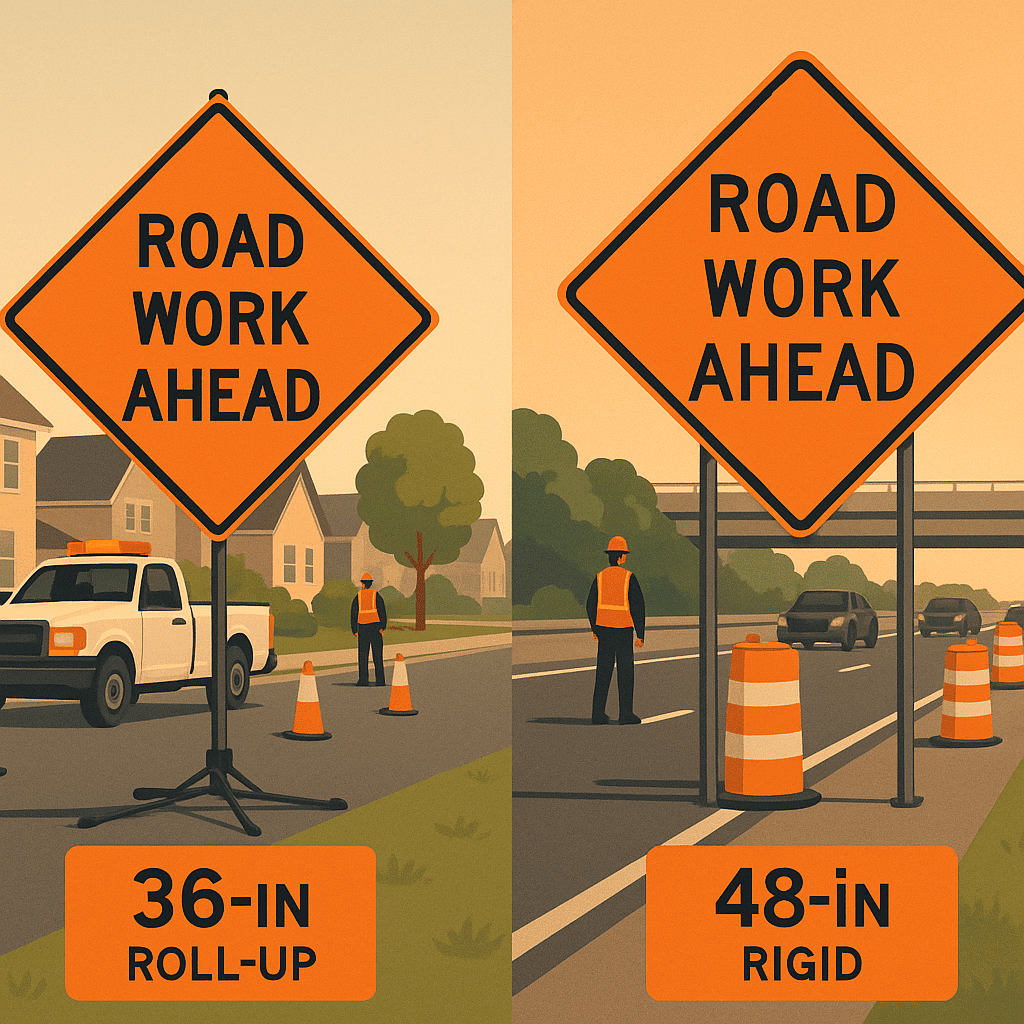
When to Use 36-Inch vs. 48-Inch Roll-Up Construction Signs Your guide to choosing the right sign size for road safety and MUTCD compliance. Overview 36-Inch Signs 48-Inch Signs Comparison FAQ Choosing the correct roll-up construction sign size—36-inch or 48-inch—is critical for ensuring safety and compliance in road work zones. Signs like “Utility Work Ahead” must be visible and … Continue reading “When to Use 36-Inch vs. 48-Inch Roll-Up Construction Signs”
The Science Behind Traffic Cones: Why the Conical Shape? Traffic cones are an unmistakable feature of roads, construction sites, and urban environments, instantly recognizable by their bright colors and distinctive conical shape. Far from being a random design choice, the cone’s shape is a triumph of engineering, optimized for visibility, stability, stackability, and versatility. This article explores the … Continue reading “Discover the science behind Traffic Cones conical shape”
Building a Traffic Safety Culture at Work: Steps Organizations Can Take to Protect Employees Who Drive Traffic crashes are a leading cause of workplace fatalities, costing employers billions annually in medical care, legal expenses, property damage, and lost productivity. For employees who drive as part of their jobs—whether full-time, part-time, or occasionally—organizations must foster a traffic safety … Continue reading “Building a Traffic Safety Culture at Work”