


Why Cold Weather Lowers Tire Pressure — And How to Stay Safe This Winter
Every year, as soon as the first real cold snap hits, tire shops and forums explode with the same question: “Why is my tire pressure warning light on when I didn’t hit anything?” The answer is simple physics — and it’s confirmed by every major tire manufacturer and safety organization.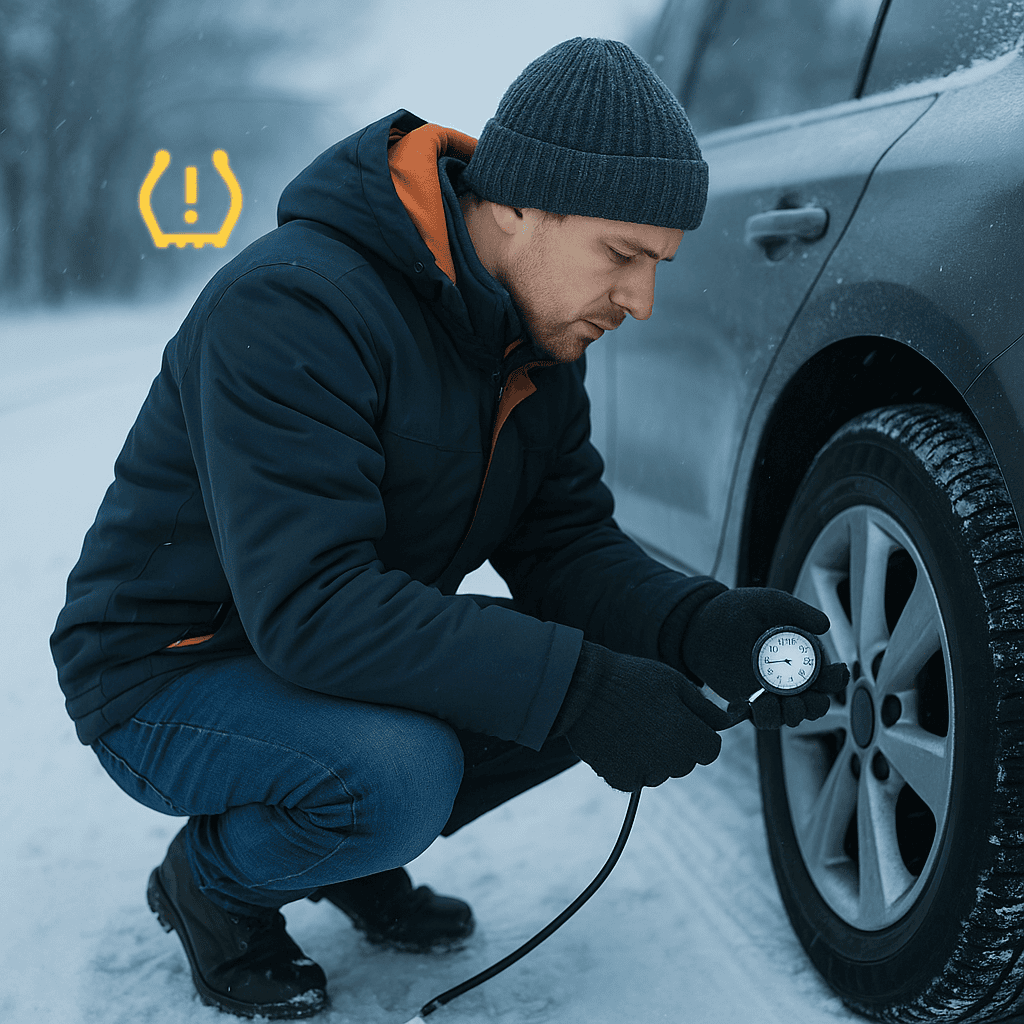
The Science: Temperature and Pressure Are Directly Related
According to the Ideal Gas Law (PV = nRT), when temperature drops, pressure drops proportionally.Tire pressure drops approximately 1 PSI for every 10 °F (5.6 °C) decrease in temperature.This rule is cited by: Example: Tires set to 35 PSI at 70 °F in fall can drop to ~30 PSI after an overnight low of 20 °F — a 5 PSI loss before you even start the car.
Why Underinflation Is Especially Dangerous in Winter
Running just 6 PSI low can:- Reduce snow & ice traction by 30–50% (Bridgestone)
- Add 10–15 feet of stopping distance on wet roads (NHTSA 2021)
- Increase hydroplaning risk and fuel consumption by 4–9% (U.S. Dept. of Energy)
- Shorten tire life dramatically due to uneven wear
How Often Should You Check Tire Pressure in Winter?
Official guidance from AAA, NHTSA, and every tire maker:At least once a month — and after any 20 °F temperature swing.
- Check when tires are cold (parked 3+ hours or driven <1 mile)
- Use a reliable digital or dial gauge
- Inflate to the vehicle placard pressure (door jamb or manual) — NOT the max PSI on the sidewall
Why the TPMS Light Comes On in the Morning (Then Disappears)
Overnight cooling → pressure drops → light on. Driving warms the tires 40–60 °F → air expands → light off. Warning: The light going off does not mean your tires are properly inflated for the day.Expert Cold-Weather Tips
- Many shops and Tire Rack recommend inflating 3–4 PSI above placard in extreme cold (return to normal in spring)
- Dedicated winter tires outperform all-seasons below 45 °F — even when both are perfectly inflated (Consumer Reports)
- Nitrogen reduces temperature swings by ~30–40% (Goodyear), but regular air + monthly checks is still excellent
Quick Reference: Temperature Drop → PSI Loss
“>| Temperature Drop | Approximate PSI Loss |
|---|---|
| 10 °F (5.6 °C) | 1 PSI |
| 20 °F (11 °C) | 2 PSI |
| 30 °F (17 °C) | 3 PSI |
| 40 °F (22 °C) | 4 PSI |
| 50 °F (28 °C) | 5 PSI |
Sources: NHTSA, Tire Rack, Michelin, USTMA