


Understanding 2-Way, 3-Way, 4-Way & All-Way Supplemental Plaques for STOP Signs
Supplemental plaques play an essential role in communicating how traffic flows at intersections controlled by STOP signs. This guide explains the differences between 2-Way, 3-Way, 4-Way, and All-Way plaques and when contractors, municipalities, and property owners should use each one.
What Are Supplemental STOP Plaques?
Supplemental plaques such as “2-WAY,” “3-WAY,” “4-WAY,” and “ALL-WAY” are installed directly beneath a standard STOP (R1-1) sign. These plaques inform drivers whether cross traffic is also required to stop — critical information for reducing confusion and preventing crashes. According to the Manual on Uniform Traffic Control Devices (MUTCD), supplemental plaques help clarify intersection type and improve driver compliance and safety.2-Way STOP Supplemental Plaques
 A 2-WAY supplemental plaque is used where drivers on only one road must stop, while cross traffic continues without stopping.
These intersections are also known as “two-way stops.” The plaque alerts drivers that cross traffic does not stop and they must yield appropriately.
Shop 2-WAY STOP Supplemental Plaques
A 2-WAY supplemental plaque is used where drivers on only one road must stop, while cross traffic continues without stopping.
These intersections are also known as “two-way stops.” The plaque alerts drivers that cross traffic does not stop and they must yield appropriately.
Shop 2-WAY STOP Supplemental Plaques
3-Way STOP Supplemental Plaques
 A 3-WAY plaque is installed where all three approaches to an intersection require vehicles to stop.
These intersections are less common but are often used in angled or T-shaped roadways where full multi-directional stopping improves safety.
Shop 3-WAY STOP Supplemental Plaques
A 3-WAY plaque is installed where all three approaches to an intersection require vehicles to stop.
These intersections are less common but are often used in angled or T-shaped roadways where full multi-directional stopping improves safety.
Shop 3-WAY STOP Supplemental Plaques
4-Way STOP Supplemental Plaques
 A 4-WAY STOP plaque indicates that all four legs of an intersection are required to stop.
This is the most common multi-stop intersection configuration and is used to manage higher-volume cross traffic or low-speed urban streets.
Shop 4-WAY STOP Supplemental Plaques
A 4-WAY STOP plaque indicates that all four legs of an intersection are required to stop.
This is the most common multi-stop intersection configuration and is used to manage higher-volume cross traffic or low-speed urban streets.
Shop 4-WAY STOP Supplemental Plaques
“ALL-WAY” Supplemental Plaques
 The ALL-WAY plaque (MUTCD R1-3P) is a universal version of multi-stop plaques and can replace 2-WAY, 3-WAY, or 4-WAY plaques when appropriate.
“ALL-WAY” indicates that traffic in all directions must stop, regardless of the number of approaches.
Many municipalities prefer “ALL-WAY” because it applies to any multi-stop configuration.
Shop ALL-WAY STOP Supplemental Plaques
The ALL-WAY plaque (MUTCD R1-3P) is a universal version of multi-stop plaques and can replace 2-WAY, 3-WAY, or 4-WAY plaques when appropriate.
“ALL-WAY” indicates that traffic in all directions must stop, regardless of the number of approaches.
Many municipalities prefer “ALL-WAY” because it applies to any multi-stop configuration.
Shop ALL-WAY STOP Supplemental Plaques
When Should Each Type Be Used?
- 2-WAY: Only the major road stops; cross-traffic does not.
- 3-WAY: All three approaches stop; used in T-intersections or angled geometry.
- 4-WAY: All four approaches stop; common in neighborhood and commercial areas.
- ALL-WAY: Universal plaque for any multi-stop intersection; simplifies sign selection.
MUTCD Compliance
All supplemental plaques offered by the Traffic Safety Store meet federal MUTCD requirements, including:- Standardized legend and letter height
- Reflective sheeting (typically High-Intensity Prismatic or Diamond Grade)
- Aluminum construction for long-term outdoor durability
- Use only in combination with an R1-1 STOP sign
Shop Supplemental STOP Plaques at Traffic Safety Store
We stock all four major supplemental plaque types, ready to ship from multiple distribution centers nationwide.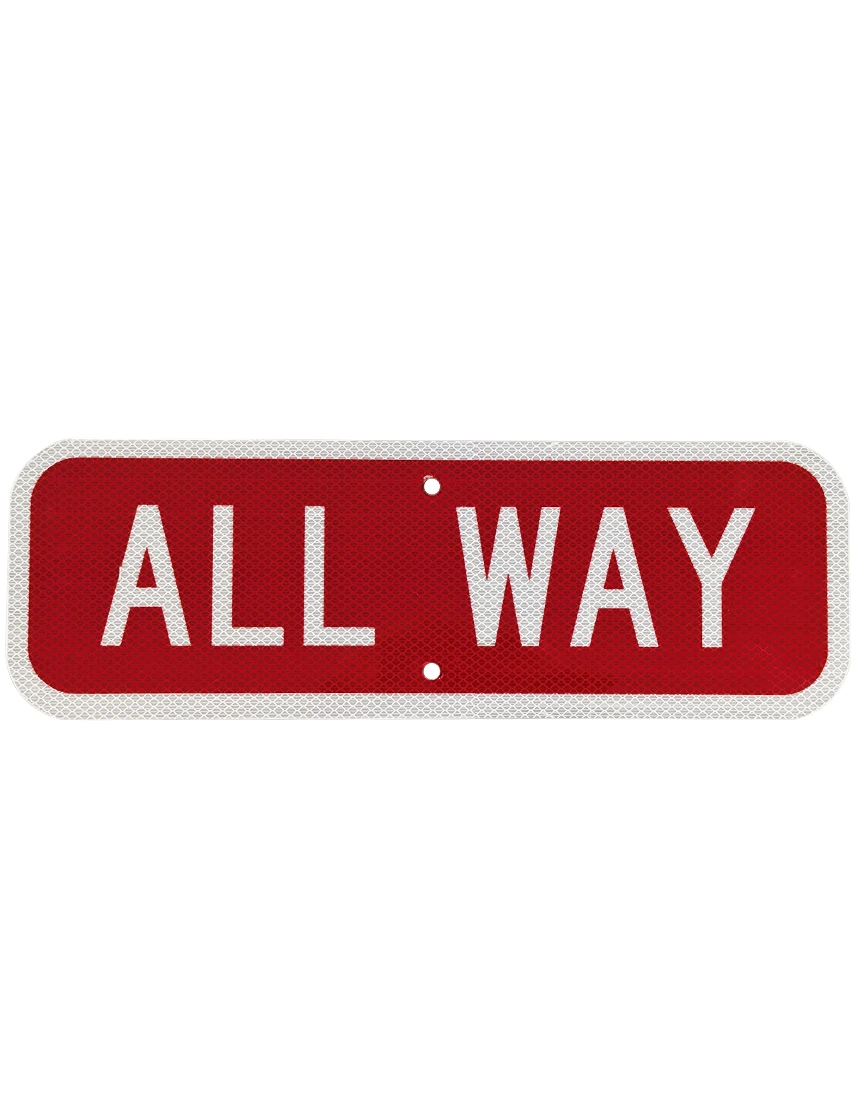
ALL WAY (R1-3P)
ALL WAY (R1-3P)
Quick Facts:
- High Intensity Prismatic Reflective sheeting
- 0.080" Gauge Aluminum
- 18" Wide x 6" Tall
- Pre-punched 3/8” mounting holes
- Meets MUTCD specifications

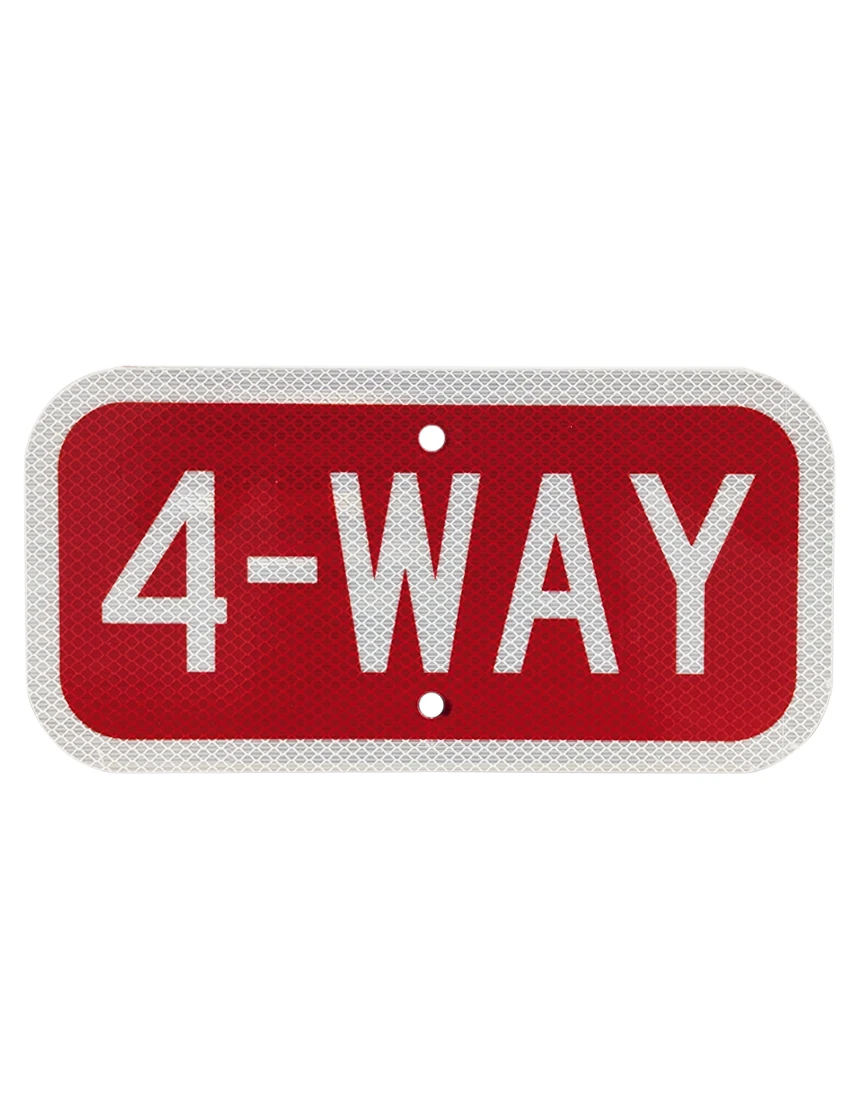
4-Way
4-Way
Quick Facts:
- High Intensity Prismatic Reflective sheeting
- 0.080" Gauge Aluminum
- 12" Wide x 6" Tall
- Pre-punched 3/8” mounting holes
- Meets MUTCD specifications
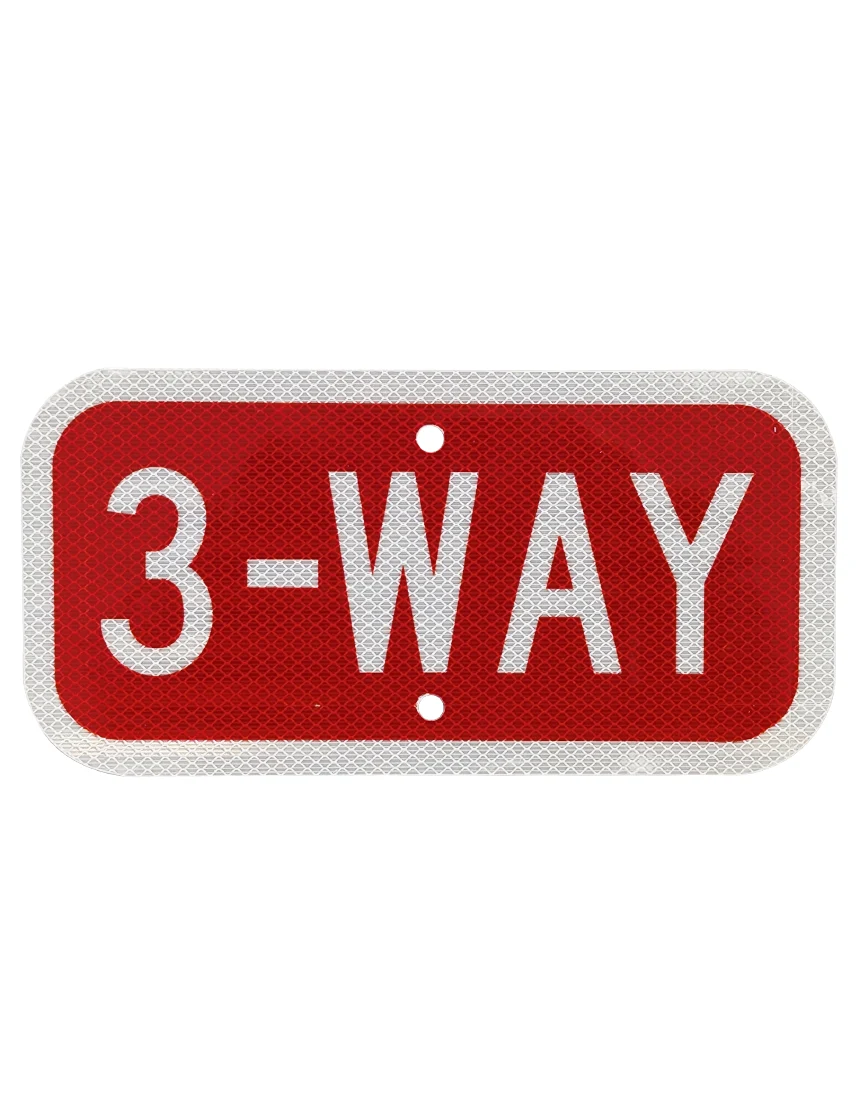
3-Way Signs
3-Way Signs
Quick Facts:
- High Intensity Prismatic Reflective sheeting
- 0.080" Gauge Aluminum
- 12" Wide x 6" Tall
- Pre-punched 3/8” mounting holes
- Meets MUTCD specifications
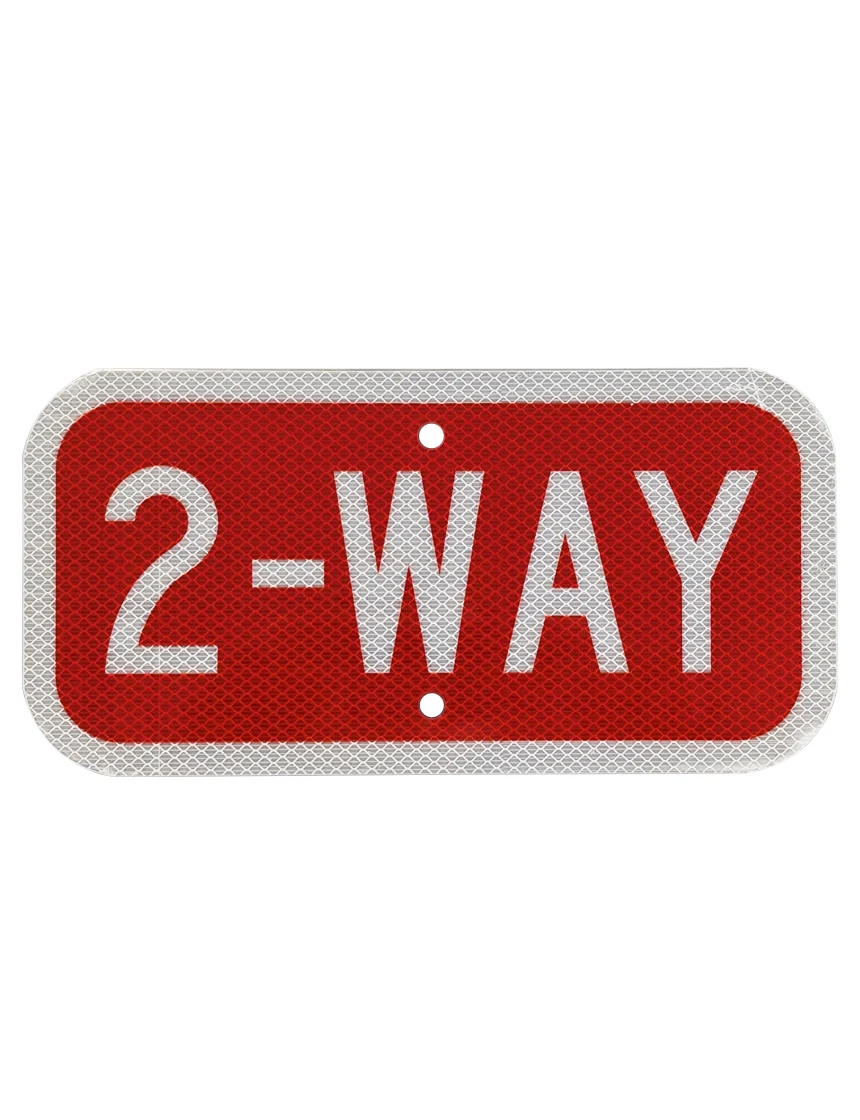
2-Way Signs
2-Way Signs
Quick Facts:
- High Intensity Prismatic Reflective sheeting
- 0.080" Gauge Aluminum
- 12" Wide x 6" Tall
- Pre-punched 3/8” mounting holes
- Meets MUTCD specifications