


Heat-Stress Playbook for Road Crews: Getting Ahead of OSHA’s Forthcoming Heat-Illness Rule
1. Why this matters — and why now
Road construction already tops the list for outdoor heat exposure, and climate models show summer heat indexes along the I-95 and I-35 corridors climbing another 3–5 °F by 2030. Meanwhile, OSHA is moving toward the first national heat standard, aimed squarely at sectors like highway construction.2. Where the rule stands today
| Milestone | Date | What it did |
|---|---|---|
| ANPRM (Advance Notice of Proposed Rulemaking) | Oct 27 2021 | OSHA opened the public docket (86 FR 59309). |
| SBREFA Panel | Nov 3 2023 | Small-business advisors outlined cost and feasibility issues. |
| NPRM (Proposed Rule) | Aug 30 2024 | Proposed rule published; mandates heat-illness plans, water + shade at 80 °F HI, paid 15-min breaks every 2 h at ≥ 90 °F HI (comment period closed Feb 26 2025). |
| Final rule expected | Late 2025 – Early 2026* | 60-day effective date likely. |
*Per the U.S. Department of Labor regulatory agenda.
Bottom line: Contractors have one more hot season before compliance becomes enforceable. Start now and you’ll beat both the rule and the heat.3. Know the hazard
- Heat index (HI) ≥ 80 °F triggers basic controls; ≥ 90 °F demands enhanced breaks, active monitoring, and emergency response.
- Wet-Bulb Globe Temperature (WBGT)–based limits from NIOSH and the ACGIH TLV® remain the best practice for strenuous paving, milling, and flagging tasks.
- New hires lose acclimatization in as little as one weekend off. Ramp them up: 50 % work on Day 1, 60 % on Day 2, 80 % on Day 3, then full duty.
4. The Heat-Stress Playbook (8 key plays)
| # | Play | Road-Crew Actions |
|---|---|---|
| 1 | Measure in real time | Install onsite WBGT or HI sensors at lane-closure points; enable OSHA-NIOSH Heat-Safety-App alerts. |
| 2 | Map your risk | Overlay forecast HI with hour-by-hour task lists. Flag times where asphalt lay-down, jack-hammering, or flagging overlaps with HI ≥ 90 °F. |
| 3 | Engineer it out | • Set up mesh shade at staging areas and flagger posts. • Rotate crews on rollers and lutes to cooled equipment cabs every 30 min. • Provide icy-water troughs for forearm immersion—drops core temp by ≈ 0.3 °C in 10 min. |
| 4 | Hydrate smart | Offer cool (~59 °F) water within 10 m of every worker and electrolyte drinks when sweating exceeds 90 min. |
| 5 | Work–rest cycles | HI 88–92 °F: 45 min work / 15 min rest. HI ≥ 96 °F: 30 min / 30 min. |
| 6 | Acclimatize & re-acclimatize | Track each employee’s heat days; restart ramp-up if away ≥ 4 days. |
| 7 | Wearable tech | Pilot skin-temperature or heart-rate sensors; several DOTs saw a 25 % drop in heat-related first-aid cases. |
| 8 | Train, drill, respond | Weekly tailgate talks; post “Cool-Down, Check-In, Call EMS” signs; tabletop a heat-stroke scenario before July 1. |
5. Rapid-start implementation roadmap
| When | Action Item |
|---|---|
| May – June 2025 | Purchase WBGT meters & wearable kits; update Job Hazard Analyses with HI thresholds. |
| July 2025 | Launch acclimatization logs; mark shaded break zones on traffic-control plans. |
| Aug 2025 | Conduct mock OSHA inspection: verify water logs, training rosters, sensor-data retention ≥ 30 days. |
| Sept 2025 | After-action review; adjust budgets for FY-2026 PPE and portable shade. |
| Jan 2026 (or rule effective date) | Full compliance—heat-illness plan integrated into Site-Specific Safety Plan and Internal Traffic Control Plan. |
6. Quick-reference compliance checklist
- Written Heat-Illness Prevention Plan (HIPP) on every project > 3 days.
- Two cool-water stations per 20 workers, refilled every 2 hours.
- On-site WBGT/HI readings every 60 min, logged.
- Mandatory 15-min paid break every 2 h once HI ≥ 90 °F.
- Documented acclimatization schedule for all new or returning workers.
- Supervisor training on heat-stroke signs & EMS activation.
- Wearable or buddy-check system for solo flaggers.
- Post-shift cool-down + symptom survey (records kept 3 years).
- Annual program audit each April before peak paving season.
7. Key resources
- OSHA Heat Standard Home Page & NPRM (89 FR 58234)
- NIOSH Criteria for a Recommended Standard: Occupational Exposure to Heat & Hot Environments
- OSHA-NIOSH Heat Safety Tool App (iOS / Android)
- National Emphasis Program – Heat-Related Hazards (CPL 03-00-024)
8. Take-away
The impending heat standard will codify practices that smart road crews are already adopting: measure, plan, hydrate, rest, and respond. Treat the 2025 paving season as a dress rehearsal; by the time OSHA’s final rule lands, you’ll have a heat-hardy workforce—and a compliance binder ready for the inspector’s knock.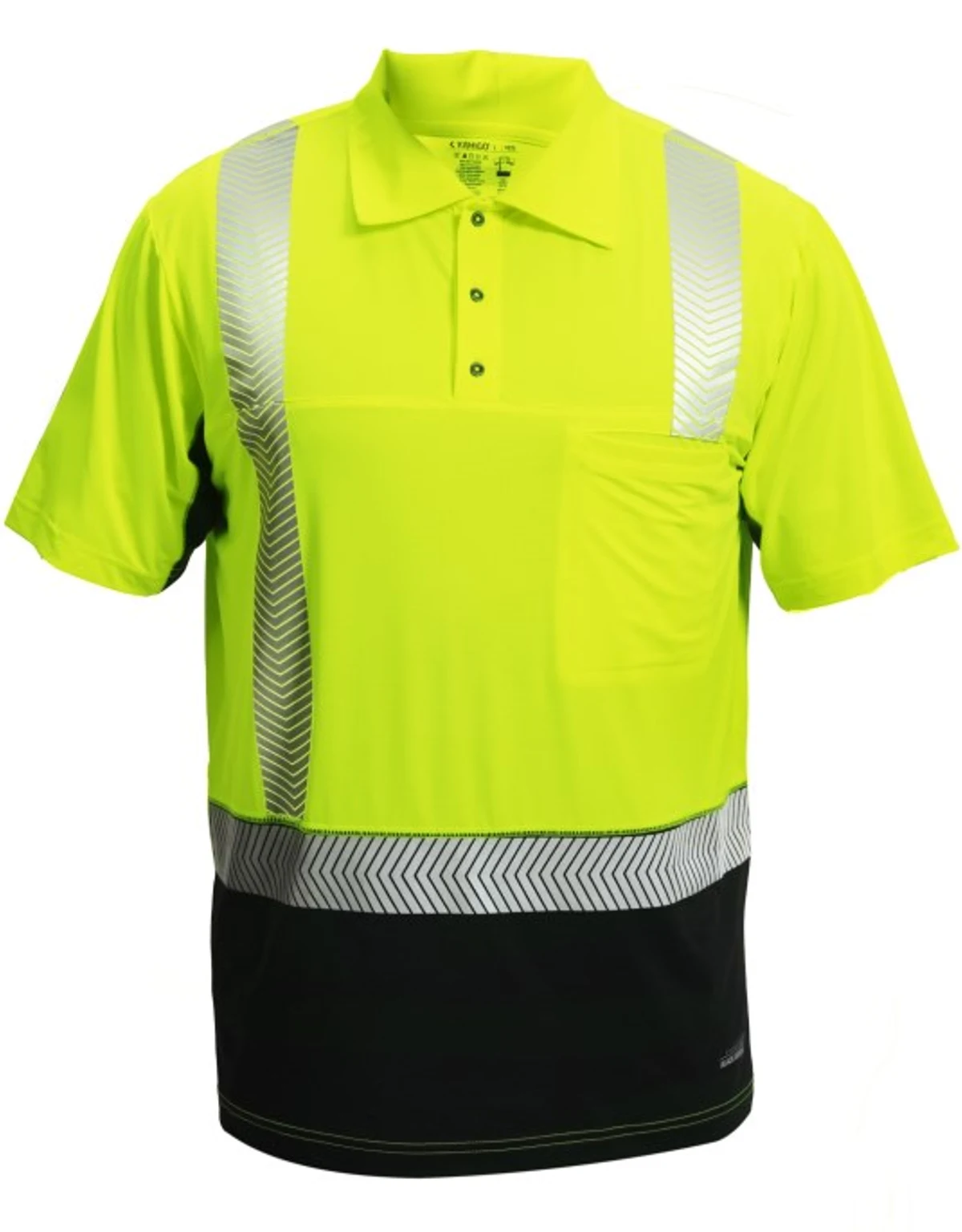
Kishigo Cool Touch Class 2 Polo Shirt
Kishigo Cool Touch Class 2 Polo Shirt
Quick Facts:
- Seven Sizes to choose from – Medium, Large, XL, 2XL, 3XL, 4XL & 5XL
-
ANSI Class 2 Compliant – High-visibility design with 2” reflective striping ensures safety in low-light and high-traffic conditions.
-
Cool & Comfortable – Lightweight, moisture-wicking front with breathable mesh back keeps you dry and comfortable in hot environments.
-
Professional Look – Polo-style collar with three-button front closure and chest pocket combines safety with a clean, professional appearance.